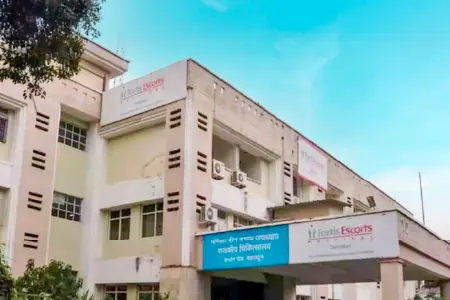
Certification in Liver Disease from British Post Graduate Medical Federation, |Fortis Escorts Hospital, Dehradun
About Dr. Rajesh Upadhyay
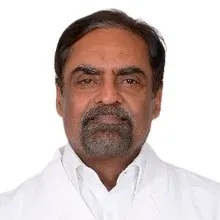
Dr. Rajesh Upadhyay is a renowned gastroenterologist and hepatologist who has worked in major institutions in both India and the United Kingdom. He is currently the Director and Head of the Gastroenterology and Hepatology Department at Max Super Speciality Hospital in New Delhi. Dr. Upadhyay is well-known in the discipline and has made major contributions to academic research, with over 65 publications published in national and international journals. He has earned various awards and orations in recognition of his great contributions to gastroenterology. Dr. Upadhyay is also involved in a number of professional organizations and serves on the editorial boards of noteworthy medical publications.
Chairman & HOD (Gastroenterology / Hepatology) at Jaipur Golden Hospital from 1992 to 2013.
Senior Consultant at Max Hospital, Pitampura, from 2010 to 2013.
Director & HOD (Gastroenterology / Hepatology) at Max super-speciality Hospital, Shalimar Bagh, from 2013 to 2016.
Max Super Speciality Hospital
Gastroscopy: It is a process where the oesophagus, stomach, and upper small intestine are examined using a flexible tube with a camera. It aids in diagnosing problems such as digestive tract tumours, inflammation, and ulcers.
Endoscopy: A minimally invasive treatment that examines and diagnoses problems in the gastrointestinal tract using a long, flexible tube equipped with a light and camera. It can execute specific therapies, gather tissue samples, and detect anomalies, giving crucial information for precise diagnosis and treatment.
Colonoscopy: This procedure involves the insertion of a flexible tube with a camera into the rectum and colon to examine the lining and detect abnormalities such as polyps, tumours, or signs of inflammation. It is an essential screening tool for colon cancer and allows for early detection and intervention.
Inflammatory Bowel Disease (IBD) Treatment: This treatment focuses on illnesses such as Crohn's disease and ulcerative colitis to reduce inflammation, alleviate symptoms, and maintain remission. It consists of a combination of medicines, modifications to lifestyles, and, in severe conditions, surgical intervention to enhance the quality of life for people with IBD.
Ulcerative Colitis Treatment: Treatment for ulcerative colitis seeks to address symptoms such as abdominal pain, diarrhoea, and rectal bleeding, as well as inflammation and encourage healing. Medication, dietary modifications, stress reduction techniques, and colon removal surgery are all possible treatment options in some circumstances.
Gall Bladder (Biliary) Stone Treatment: The most common form of treatment for gallbladder stones is the surgical removal of the gallbladder (cholecystectomy). Non-surgical techniques like oral medications to dissolve the stones or endoscopic procedures may be considered when surgery is not advised or possible.
ERCP (Endoscopic Retrograde Cholangiopancreatography): It is a specialised endoscopic operation used to identify and treat diseases of the pancreas, gallbladder, and bile ducts. It combines endoscopy and X-ray imaging to repair blockages, remove gallstones, or address other abnormalities in the biliary and pancreatic systems.